
Ty Robinson | December 30, 2025 | Personal Injury

When planning a trip to or from Charleston, South Carolina—whether it’s for business, family visits, or a beach getaway—one common question many travelers ask is: “Is flying safer than driving?” Let’s break it down using the latest data and safety insights.
The Big Picture: Flying vs. Driving Safety in the U.S.
According to federal transportation statistics, air travel has a near-zero injury and fatality rate per 100 million passenger miles traveled, far lower than car travel. Over the last two decades, aviation has seen only a handful of serious injuries and fatalities compared with tens of thousands on U.S. roadways each year.
In contrast, motor vehicle travel continues to account for far more injuries and deaths every year. Even as overall traffic safety has improved, road travel remains significantly riskier on a per-mile basis, with much higher rates of crashes and fatalities compared to commercial flights.
Safety Comparisons for Charleston Travelers
If you’re weighing whether to drive to Charleston or fly into Charleston International Airport (CHS), here’s how safety compares:
- Flying into Charleston International Airport: This airport is South Carolina’s busiest, serving millions of passengers annually without frequent serious safety incidents.
- Driving in Charleston and South Carolina: South Carolina tracks traffic collisions statewide, and like many states, sees its share of crashes and road injuries each year. Reliable local figures are available through the South Carolina Department of Public Safety’s traffic collision data.
While there aren’t comprehensive city-specific per-mile safety rates for Charleston itself, the national trend holds true locally: flying is statistically safer than driving when you compare risks on a per-mile, per-trip basis.
Why Flying Seems Riskier—but Isn’t
Many travelers report feeling more anxious about flying than driving, largely because airplane accidents are dramatic and widely covered by the news—even though they are quite rare. In comparison, car accidents happen frequently but often don’t attract national headlines. This perception vs. reality gap makes flying feel riskier than it actually is.
Part of why flying is so safe comes down to:
- Strict safety regulations governed by the Federal Aviation Administration (FAA)
- High-level pilot training and continuous monitoring
- Advanced aircraft technology and maintenance checks
In contrast, driving safety depends heavily on:
- Driver behavior (like speeding, distraction, or impaired driving)
- Road conditions and weather impacts
- Vehicle maintenance and varying skill levels
These factors contribute to the higher number of crashes and fatalities seen on U.S. roads each year.
Practical Safety Tips for Travelling in Charleston
Whether you’re flying into Charleston or driving through the city, a few simple safety habits can help reduce travel risks and make your trip smoother.
Travellers should:
- Stay alert on busy roads: Traffic congestion, tourists, pedestrians, and cyclists are common in downtown Charleston and along major routes like I-26 and U.S. 17. Drive cautiously and avoid distractions.
- Adjust for weather conditions: Coastal rainstorms can develop quickly. Slow down on wet roads and allow extra braking distance.
- Plan ahead at the airport: Arrive early at Charleston International Airport to account for security lines, delays, or weather-related changes.
- Follow basic safety practices: Always wear seat belts, follow posted signs, and remain aware of your surroundings whether you’re driving or flying.
While no form of travel is completely risk-free, planning ahead and practicing basic safety awareness can significantly reduce your chances of encountering problems while traveling in Charleston.
Staying Safe in Charleston, SC
If your priority is minimizing travel risk, the data clearly shows that flying is statistically safer than driving—including for trips involving Charleston, SC. That doesn’t mean driving is inherently unsafe—it just carries a higher chance of being involved in a crash compared with flying on a scheduled commercial flight.
If you’ve been in an accident, Ty Robinson Personal Injury & Car Accident Law Firm can help. Call today to schedule a free consultation with a Charleston personal injury lawyer.
If you were injured in an accident in Charleston, South Carolina, and need legal help, contact our Charleston personal injury lawyer at Ty Robinson Personal Injury & Car Accident Law Firm to schedule a free case review today.
Ty Robinson Personal Injury & Car Accident Law Firm
28 Broad St Suite 204-2
Charleston, SC 29401
(843) 278-2222
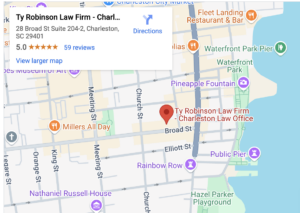
Ty Robinson Personal Injury & Car Accident Law Firm – Charleston Law Office
28 Broad St Suite 204-2,
Charleston, SC 29401
(843) 278-2222
Charleston Office – Mechanic Street
2201 Mechanic Street Suite D
North Charleston SC 29405
* By Appointment Only
(843) 278-2222